Modern Ceiling Fans
Machines with moving parts need lubrication, ceiling fans included. But the crude holes present on older model ceiling fans seem to be missing from today’s designs.
It turns out, the missing fossil oil hole does non indicate a change inward how you lot petroleum the fan. Rather it way that the entire lubrication arrangement has been upgraded. This is not to tell that it volition never fail, together with at that place are all the same other reasons why your fan may live squeaking or wobbling.


The vast majority of modernistic ceiling fans either take long-lasting lubricant reservoirs inside the ball bearings that do not necessitate replenishing, or they are made from a self-lubricating material. Neither of these designs would need to live oiled.
Modern Ceiling Fans Don’t Need Oiling
Modern ceiling fans accept self-lubricating bearings and don’t ask to live manually oiled.
While it isn’t clear when self-lubricating bearings were beginning used inwards ceiling fans, about assumptions tin can be made every bit to when they were offset incorporated into the blueprint of these units.
Self-lubricating bearings were outset used in the 1920s inwards automobiles. They were made inwards smaller sizes inwards the ’50s, together with and then inwards the ’80s, they started to be used for pulleys (generally) too power steering.
From this progression as well as the similarities betwixt pulleys, power steering, together with ceiling fans, it is reasonable to assume that self-lubricating bearings may accept entered ceiling fan design about the 1990s.
To pass on a personal observation, which aligns alongside this date, I grew upwardly inward a family that was built inwards the 1990s, in addition to this is when the ceiling fans were installed, too. None of the ceiling fans demand to live manually oiled.
However, inwards my grandmother’s menage, her ceiling fan, which dates dorsum to the belatedly 1960s, when the house was built, does take an crude oil hole for manual oiling.
Confirming No Oil Is Needed
Now, but because your fan has a seemingly modern pattern doesn’t mean that you should but assume that your ceiling fan doesn’t ask to live oiled. This may result in impairment to the fan. Instead, look for evidence to dorsum upwards this assumption.
The offset affair that can live done is to check the owner’second manual. This should explicitly state whether or non the fan needs to be oiled.
If it is non explicitly stated, one tin can assume that the ceiling fan does non need to be oiled. Manual oiling volition definitely live included inwards the general tending instructions if it is required.
Another element you lot can bank check is 1 that we accept spoken nearly quite a lot already. You tin check for the presence of an crude hole. The hole is unremarkably located on the upper component part of the housing for the motor.
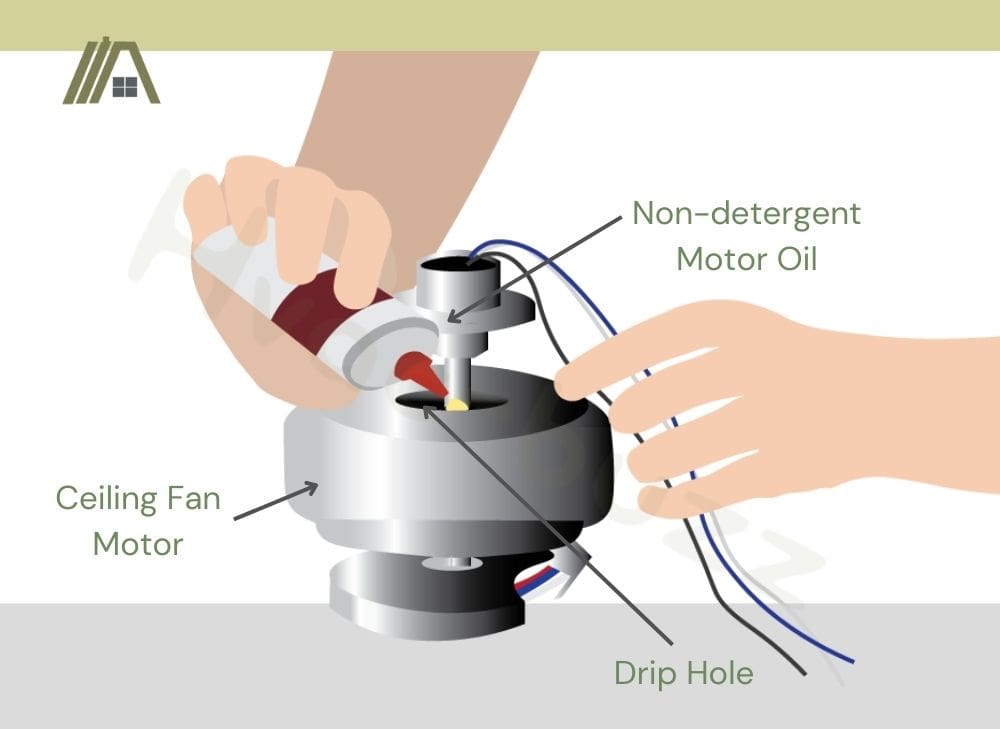
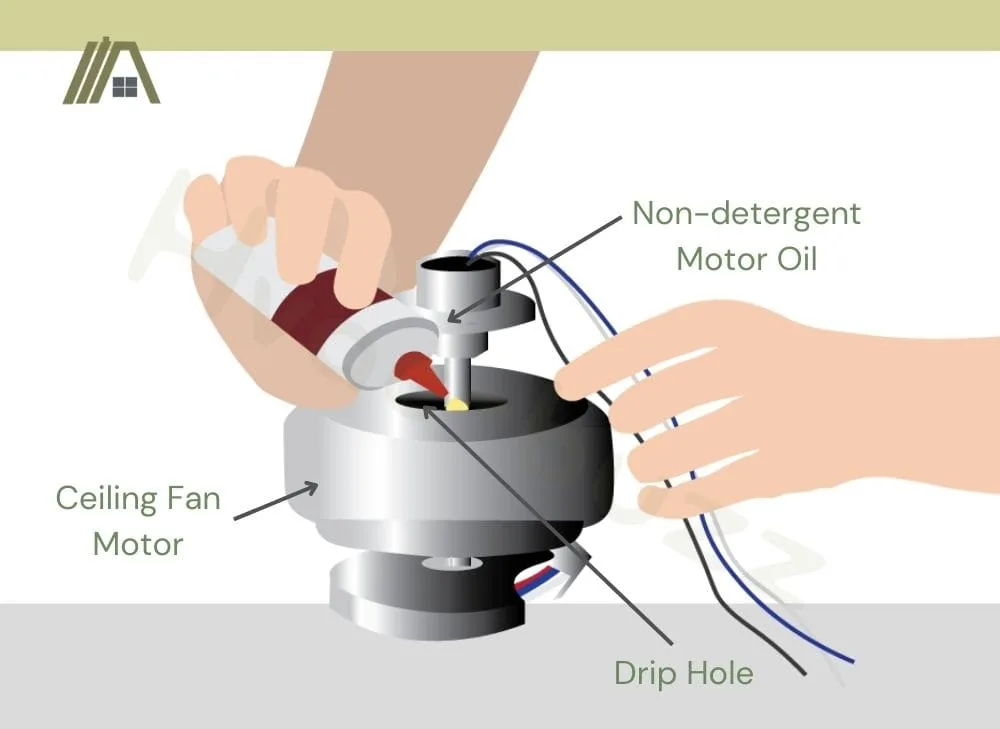
If yous end upwards finding the hole, and so yous will accept to introduce a lubrication schedule. Happily, y'all don’t accept to have the fan down to do this.
For an absolutely surefire fashion to notice out if your ceiling fan needs rock oil or not, contact the manufacturer direct.
If this is the road y'all go, live sure to supply the manufacturer alongside the right type of fan you accept. They may industry fans that necessitate oil to be added also equally fans that don’t.
How Do Self-Lubricating Ball Bearings Work?
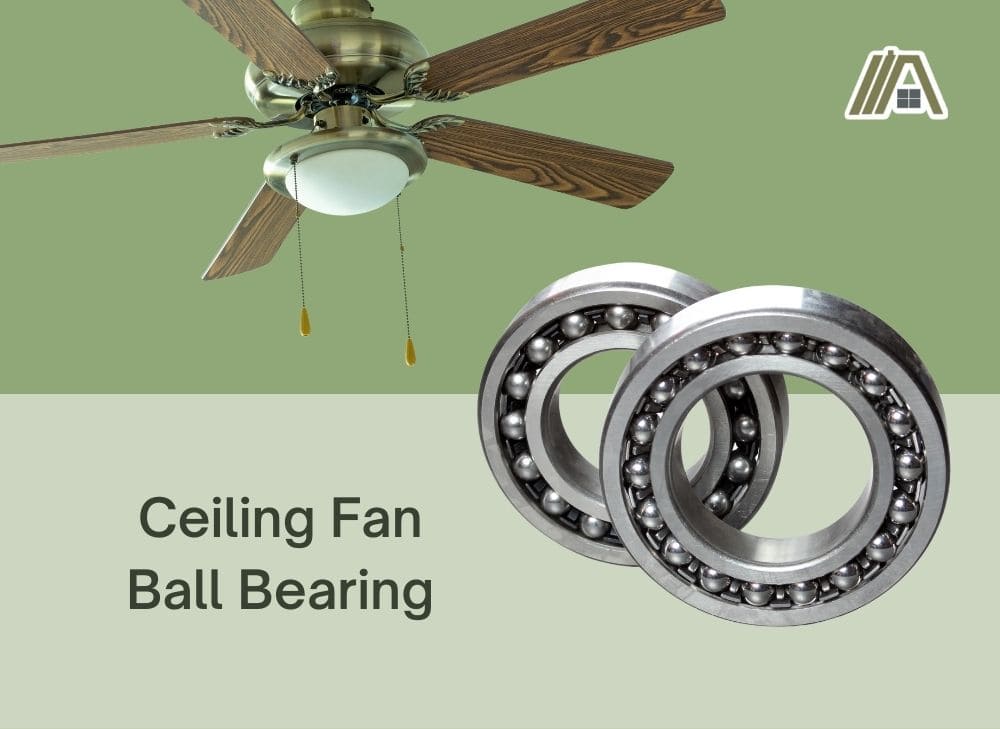
Self-lubricating ball bearings are contained within two circles. One is smaller, ane is larger, together with the bearings are contained inward betwixt these circles.
On the inner constituent of the circles is a lubricant that comes from a reservoir within 1 of the circles (usually the outer one).
As the ball bearings act, they contact this lubricant in addition to get lubricated.
Now, if y'all are anything similar me, so at this indicate, y'all are wondering if the reservoir of lubricant can run out. The answer is that it sure can, simply nosotros’ll go to this in the adjacent department.
First, allow’sec await at the other design for these ball bearings.
Self-lubricating ball bearings can likewise go past having the lubricant live a part of the ball bearing cloth itself. These are the types of self-lubricating ball bearings that are considered lubricated for life.
Can Self-Lubricating Ball Bearings Fail?
So, every bit hinted at, self-lubricating ball bearings can fail.
The only type of self-lubricating ball bearings that tin can’t fail are those that take a lubricant inward their own material (1.e., the minute type of self-lubricating ball bearing that nosotros discussed higher up.

The ball bearings that are lubricated past contacting pocket-size amounts of lubricant from a reservoir tin fail inward 2 ways:
- The lubricant could only operate out.
- The balls end moving for long plenty that the lubricant dries upward.
Although rare, the render of lubricant within a self-lubricating ball bearing system could operate out. This is almost mutual if the bearings are moving at high speed together with going through the render of lubricant apace.
Lubricant running out could as well live caused past a crevice inwards the piece that is supplying the lubricant.
Self-lubricating ball bearings could as well fail if they haven’t moved in a piece and the lubricant they were coming into contact alongside dries out.
This is too quite rare merely it is possible. How long a lubricant tin get earlier drying out volition depend on the type of lubricant it is.
Other Causes of Noise or Wobbling
Ceiling fans wobbling or making undue racket could be caused past ball bearings that are not properly lubricated. However, if y'all take a self-lubricating fan, it is less probable that this is the cause of your troubles.
There are other reasons why ceiling fans become noisy or unsteady, which you lot should consider. Noise or wobbling could be caused past whatever of the next:
- Loose/missing screws for fastening the fan to the ceiling.
- Loose/missing screws fastening the blades to the mounting slice (makes the fan unbalanced).
- Dust on the blades (tin also effort imbalance).
- Misaligned blades.
- Warped blades.
- Overworked or improperly maintained motor.
- Loose light fixture.
- Poorly positioned motor cover that is in contact amongst parts of the fan it shouldn’t be.
It’sec of import to address a wobbly ceiling fan every bit it could place close to dangers, although non the one you lot are thinking of—it’second real unlikely the fan will fall down on your caput. Instead, the danger is from things similar trapped or frayed wires or excess strain on the motor (overheating).
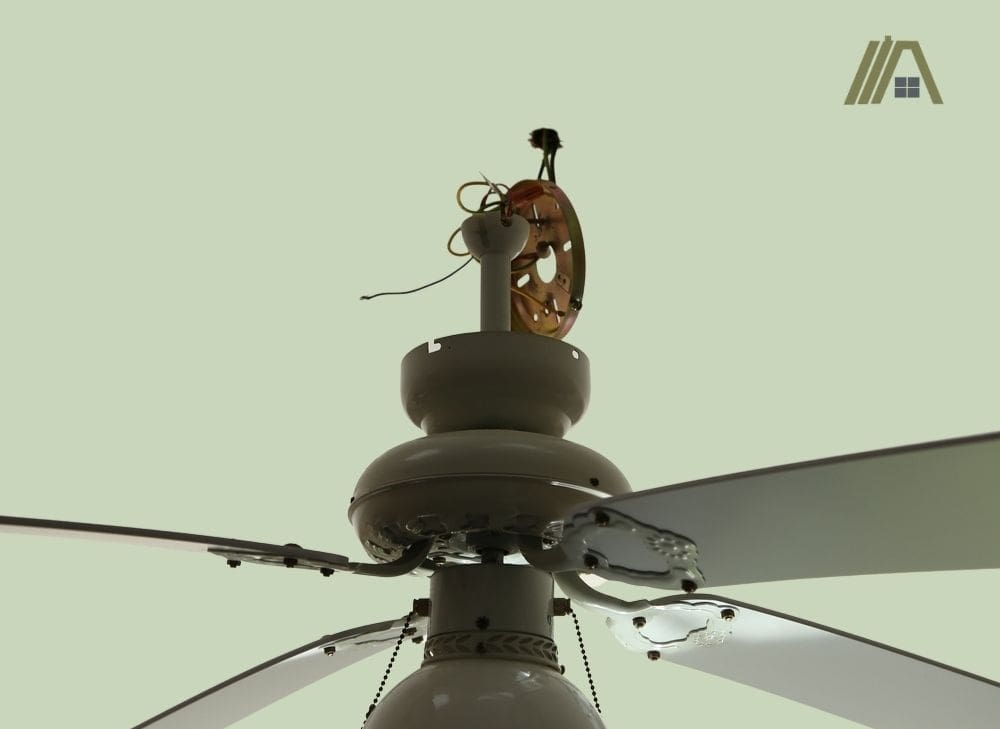
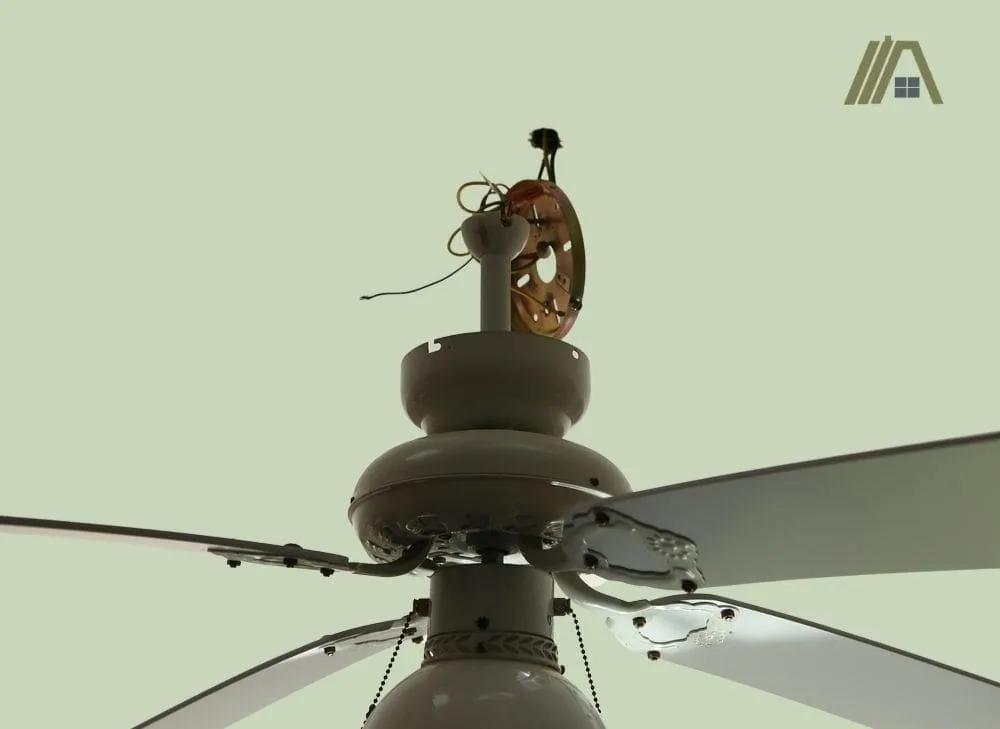
Noises should too not be discounted as harmless. Often, they are an early on indicator of a larger job too potential danger.
While just about dissonance should be expected from ceiling fans (I sure as shooting tin can’t think of any ceiling fans that never made a sound!), uncharacteristic, loud, or altered noises may live the upshot of some problems.
Any noises like electrical pops or hums should be looked into with urgency.
Modern Ceiling Fans Still Require Maintenance
If yous have a self-lubricating ceiling fan, this does not hateful that yous tin can cross it off of the list of appliances/devices requiring maintenance.
Two of the virtually important things that are required are cleaning as well as occasionally tightening the screws.
You demand to make clean the blades together with the motor to forbid unbalanced rotations in addition to motor strain. And you need to tighten the screws, which go release from the fan’sec cause, to forbid the fan from becoming unbalanced as well as noisy.


Comments
Post a Comment